We use Pedigree charts to study the inheritance of traits by examining the family trees. These family trees are known as Pedigrees. This can be used to track Mendelian Inheritance patterns in humans, to identify carriers of recessive alleles. Predicting the probability of inheritance in an offspring, and analyzing complex traits such as mitochondrial, polygenic or sex-linked.
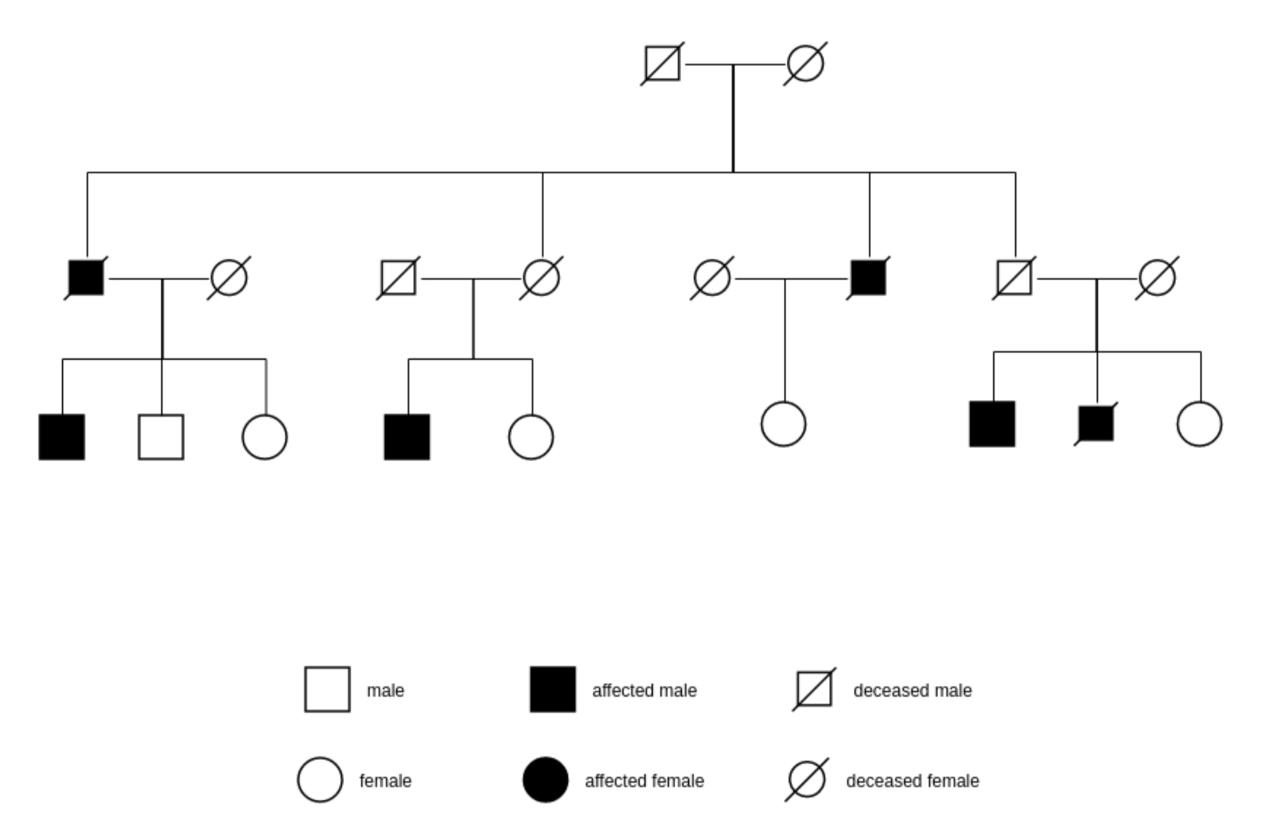
As you can see, here is a sample pedigree chart for you. In this chart we follow certain rules to identify the chart and analyze it. So it is expected for you to memorize it.
In this chart:
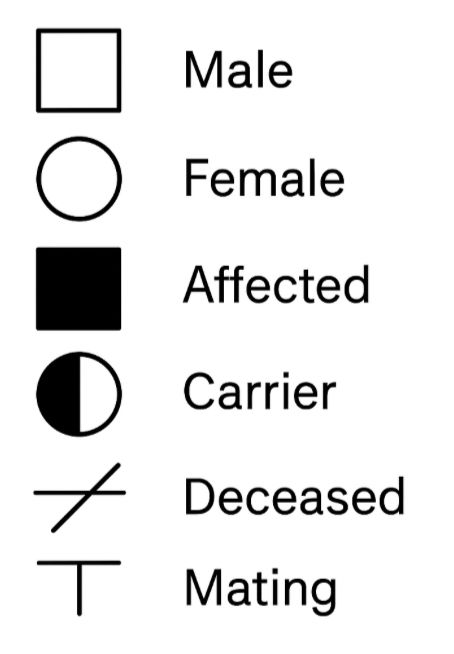
- Circle denotes a female.
- Square denotes a male.
- Shaded shape denotes the affected people.
- Half-shaded shape denotes carriers.
- Horizontal lines between two shapes show the mating and the vertical lines show the offspring.
The following are not commonly observed but I will include them for your knowledge.
- A double line denotes inbreeding or consanguineous mating.
- Proband or the first studied individual is shown by an arrow.
Now let’s look at how we can analyze the chart
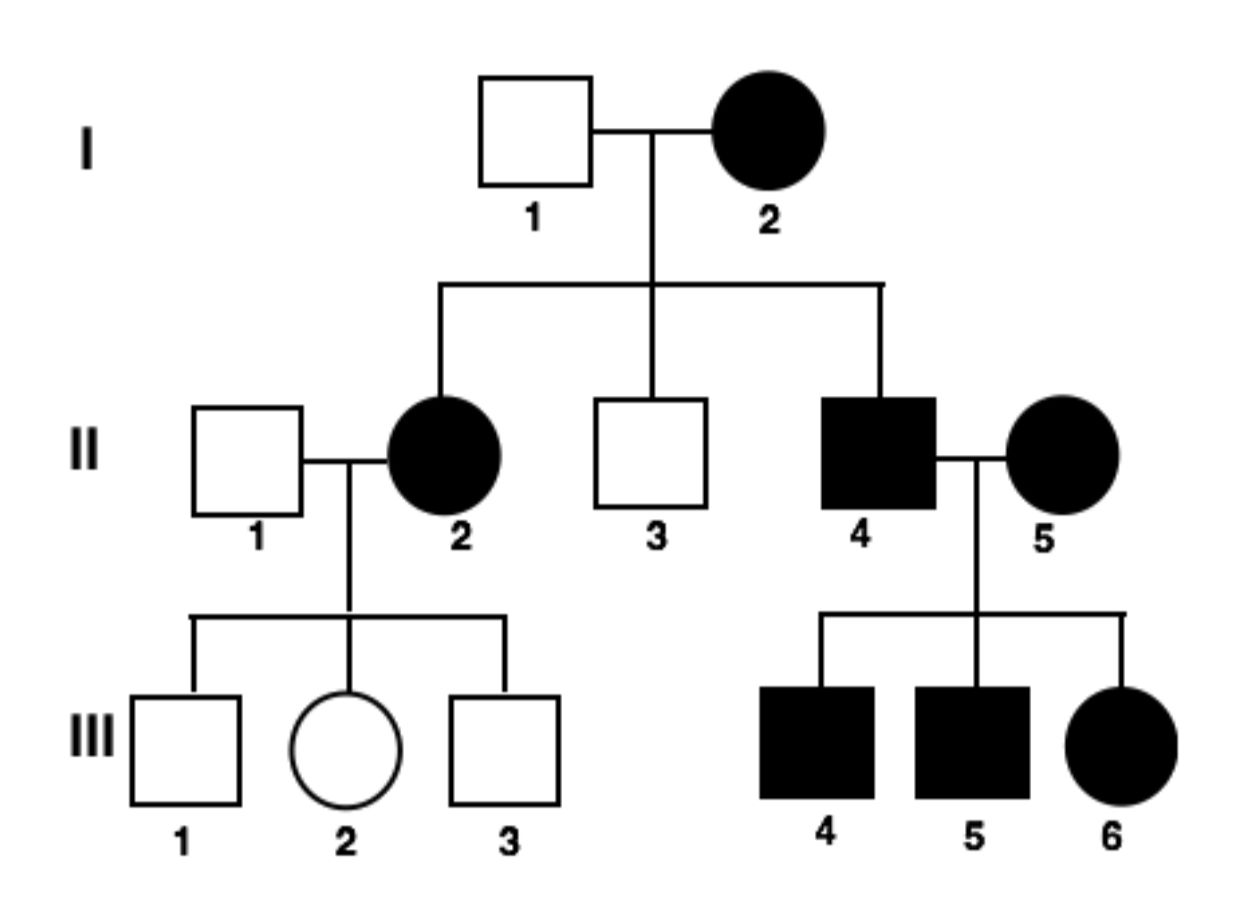
In the family shown in this pedigree there is a filled circle in the first generation: this represents an affected female. Let us look at the next generation with two branches. In the one on the right, an affected male and affected female (both shaded) have offspring that are all affected in the third generation. This is in agreement with the prediction that, when both parents are heterozygous for and transcribe the recessive allele, all offspring inherit the affected genotype.
By contrast, the other scenario demonstrates an affected female (shaded circle) mating with an unaffected male (unshaded square). Their offspring are all unaffected. This very strongly indicates that the character being studied is passed on in a recessive manner, as half of the offspring of such a cross would be phenotypically normal. The inheritance pattern follows that of the Mendelian Laws and is typical for a recessive trait, meaning that if just one of the dominant alleles is present, the trait will be masked.
Mode of Inheritance of Traits
Pedigree analysis is one of the most useful tools in genetics; it enables scientists and students to trace the transmission of traits through families over time. It is possible to discern whether a trait is a dominant, recessive, autosomal, sex-linked or mitochondrial by close examination of inheritance patterns. Here, we will briefly consider the six models of inheritance known to be widely considered in pedigree analysis.
Autosomal Dominant Inheritance
ADAs are easily identifiable in pedigrees as the trait occurs in all generations, through vertical transmission. It occurs with equal frequency in males and females, as the gene is found on an autosomal rather than sex chromosome.
A characteristic feature is that the patient's parent is typically affected. Also, each individual with an affected parent is at 50% risk of inheriting the allele. As the presence of only one copy of the mutant allele is sufficient to express the trait, homozygotes are not required for the phenotype being present.
Example: Huntington's disease, a neurodegenerative disease due to repeat expansions in the HTT gene.
Autosomal Recessive Inheritance
Often we see a very different pattern with autosomal recessive traits: they skip generations and may show a pattern that is sometimes called horizontal transmission (there’s a lot in siblings, not much in parents and kids, not to be confused with the horizontal gene transfer in bacteria).
Both sexes are equally affected. Of importance, these features occur with greater frequency in consanguineous families, in which carriers carrying the same allele tend to mate with each other.
If both parents are carriers, the following genetic ratios apply:
- 25% chance of affected offspring
- 50% chance of carrier offspring
- 25% chance of unaffected offspring
Example: Cystic fibrosis, a fatal disease of the respiratory and digestive systems.
X-linked Recessive Inheritance
This sex bias is particularly evident among X-linked recessive traits, which are observed more frequently in males than females. Since a single X chromosome is present in males, a single defective allele is enough for the trait to be expressed. Whereas two mutant alleles must be transmitted to affect the female and are thus much rarer.
Another important rule: the material does not get passed from father to son, even though the father is the one donating the Y chromosome to the son. However, see below, since affected males transmit their mutant X allele to all their daughters they also obligate carriers. Carrier mothers will have 50% sons affected. Sample: Haemophilia A, a blood clotting disorder that has been known historically to occur in the European royal lineages.
X-linked Dominant Inheritance
It is different from X-linked recessive traits where both sexes are affected, although the females usually at a higher percentage because of the 2 X chromosomes. Again, there’s no paternal passage as father-to-son, but any daughter of an affected father will have it.
Mothers, who are the heterozygote, will have a 50% risk for transmitting the trait to either a son or daughter.
For example: Fragile X syndrome, the most common inherited cause of intellectual disability.
Y-linked (Holandric) Inheritance
Y-linked inheritance is extremely uncommon because the Y chromosome is home to very few genes. Traits borne on this chromosome are present in males exclusively, and all sons of an affected father have the trait. Crucially, there is no generational leapfrogging, as the Y chromosome is always passed from father to son.
An example (often provided to discredit the concept of atavism) is hypertrichosis pinnae (long hair on the edges of the pinnae).
Mitochondrial Inheritance
Not all inheritance is nuclear. Mitochondria, the “powerhouses” of the cell, have their own DNA, which can be transmitted through families in a singular fashion — namely, exclusively from the mother.
All the children of a diseased mother take the trait, and those of a diseased father do not. The problem is that even siblings will not necessarily show the same spectrum of symptoms, because of a principle called “heteroplasmy” whereby the mitochondria can be a mixture of healthy and mutant and will behave differently accordingly.
Example: Leber’s hereditary optic neuropathy (LHON), which leads to abrupt vision loss in young adults.
Though in real life there are some factors that affect these pedigree charts.
Here are some: penetrance, variable expressivity, new mutations (de novo mutations), genetic anticipation, imprinting, sex-limited traits
Sex-Bias in Pedigrees
One very informative parameter in pedigree-based analysis is whether the trait is sex biased (or possibly effects for all practical purposes only one sex).
Equally in males and females: Autosomal inheritance is suggested.
Mostly males affected: X-linked recessive transmission, because in males (XY) a single mutant allele will be expressed (they need only one allele to manifest the disease), but it takes 2 mutant alleles for females.
Primarily females involved: X-linked dominant inheritance = one mutant allele is enough (so it acts similar to an autosomal dominant) Daughters inherit from fathers.
Only males are affected, every affected father has affected offspring, all sons of an affected father are affected: Y linked inheritance
Son of an affected mother is affected: dominant or X-linked inheritance
Example: Haemophilia A is male-biased due to X-linked recessive mode of inheritance.
Parent-Offspring Patterns
Examining the way that attributes are transmitted from parents to offspring can be useful in differentiating inheritance patterns.
Father-to-son transmission: If the trait is seen, it cannot be X-linked ( as fathers cannot pass the X to their sons, only Y). This strongly indicates autosomal or Y-chromosomal inheritance.
Father to all daughters, but no sons affected: Indicates X-linked dominant inheritance.
Mother to all offspring affected: Points to mitochondrial inheritance, because mitochondria are inherited from the mother. Example: In Leber’s hereditary optic neuropathy (LHON), a mitochondrial disease, all children of an affected mother will indeed be affected, but none of the children of an affected father will inherit the trait.
Phenotype observed in all generations: Dominant inheritance is implied.
Written by Jathurshan Myuran